

HOW TO CHOOSE A LAB-GROWN DIAMOND: THE COMPLETE GUIDE
In short: a lab-grown diamond is a real diamond, chemically, physically and optically identical to a mined one. To choose well, look at the 4Cs (cut, colour, clarity, carat), ask for an independent grading report such as IGI, pick a shape that suits your hand and your style, and see the stone in person before you decide.
Is a lab-grown diamond a real diamond?
Yes. A lab-grown diamond is pure crystallised carbon, exactly like a diamond formed deep in the Earth. It is not an imitation such as zirconia or moissanite: it has the same hardness, the same brilliance and the same chemical composition. Even experts need laboratory equipment to tell the two apart. The only difference is its origin. At daŭre, our diamonds are grown using the CVD (Chemical Vapour Deposition) method, which recreates the conditions in which diamonds form naturally. Read more on our lab-grown diamonds.
The 4Cs, explained simply
Cut
The cut decides how a diamond plays with light. It matters more than anything else for sparkle. For a round brilliant, look for an Excellent or Ideal cut grade: a well-cut stone looks livelier, and often larger, than a heavier but poorly cut one.
Colour
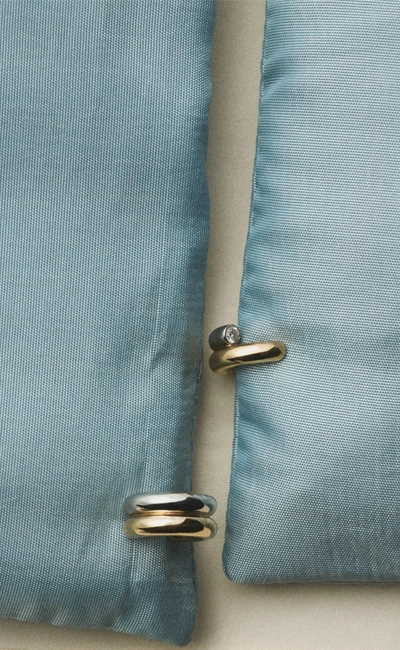
Colour is graded from D (completely colourless) to Z. Stones graded D to F are colourless; G and H are near-colourless and look white once set, especially in yellow gold. Some lab-grown diamonds are also grown in colour, like the pale yellow diamond of our Suno earring.
Clarity
Clarity describes the tiny natural marks inside a stone, from Flawless to Included. From VS1 or VS2, a diamond is usually clean to the naked eye: you see no difference, but you pay less than for a flawless grade.
Carat
The carat is a weight, not a size. Two stones of the same weight can look different depending on their shape and cut. Lab-grown diamonds let you choose a larger or purer stone for the same budget.
Why the certificate matters
An independent grading report confirms that your stone is laboratory-grown and documents its quality. IGI still grades lab-grown diamonds on the full 4Cs scale. Since October 2025, GIA no longer does: it now classifies them as "Premium" or "Standard", without precise colour or clarity grades. For a detailed reading of your stone, the IGI report is the most complete. Many stones also carry a laser-inscribed number on their girdle that matches the report. At daŭre, our lab diamonds are IGI certified upon request.
Which shape should you choose?
- Round brilliant: the most luminous and the most timeless.
- Square or asscher: architectural and graphic, with a hall-of-mirrors effect.
- Pear: soft and elongating on the finger.
- Marquise: slender, with a strong vintage character.
- Emerald cut: long, clean facets that reveal the purity of the stone, as on our Octagon pieces.
The best way to decide is to try several shapes on your own hand: a shape that looks perfect in a photo can feel completely different once worn.
How we select our diamonds at daŭre
We work only with premium-grade lab-grown diamonds, chosen for their purity, their brilliance and their proportions. For an engagement ring or a bespoke piece, we show you several stones side by side in our showroom, so you can compare them with your own eyes rather than on paper.
Good to know
Frequently asked questions
Will a lab-grown diamond change colour or become cloudy?
No. It is a diamond, with the same hardness (10 on the Mohs scale) and the same stability as a mined stone. It keeps its brilliance for generations.
Does a lab-grown diamond keep its value?
A diamond is bought for its beauty and its meaning rather than as an investment. Like most jewellery, its resale value is lower than its purchase price.
Can I see the diamonds before choosing?
Yes. Book an appointment at our showroom on Place Brugmann in Brussels: we will show you several stones and help you compare them.